A Guest's First Evening: Preparing One Comfortable Room
Prepare a comfortable guest room by clearing useful surfaces, setting out reachable essentials and leaving a modest space for belongings.
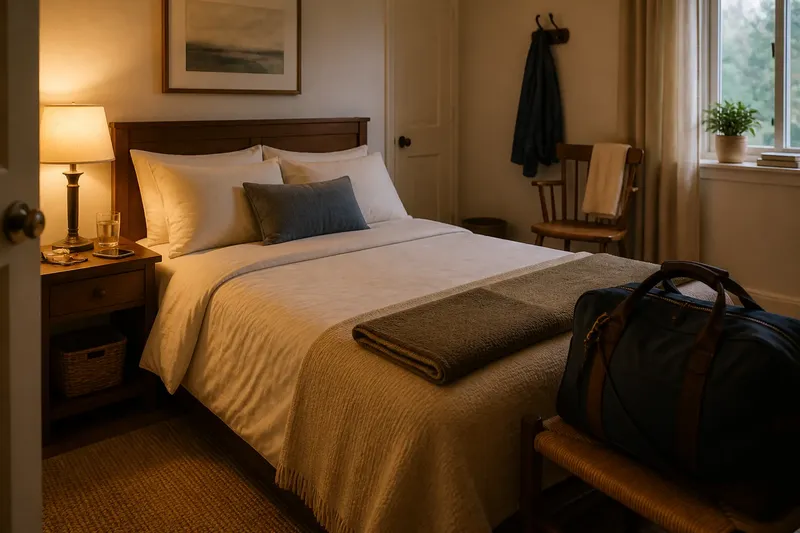
Preparing a guest room is easier when you focus on the first evening rather than tidying the whole house. A comfortable guest room needs a clear place to set things down, essentials within reach and enough room for a bag or coat. Start with the bed and work outwards, making decisions as you go.
Where should you begin in the guest room?
Choose the room your guest will use and take a quick look from the doorway. Notice what is already useful: a bedside table, a chair, a lamp, a hook or an empty drawer. You are not trying to make the room look unused. You are making its existing features easy to use.
Bring a small basket or laundry tub for items that belong elsewhere, and a cloth for dusting. Move only what blocks a guest’s likely needs. If the bedside table is covered with books, keep the ones you want there and relocate the rest. A short, focused pass is more useful than carrying belongings from room to room without deciding where they go.
Say you have a spare room with a folded drying rack beside the bed and post piled on the table. Move the rack to its usual storage place, sort the post into the household’s normal spot, then wipe the table. The expected result is a usable surface, not an entirely empty room.
How should you prepare the bed and bedside area?
Make the bed with clean sheets and check that the pillows suit the person staying, if you know their preference. Leave an extra blanket folded where it can be reached without searching. If the room tends to feel cool, put it at the foot of the bed rather than in a distant cupboard.
Clear one part of the bedside surface for a phone, glasses or a glass of water. Put the lamp switch where it can be reached from the bed, and check that the bulb works by using the ordinary switch. If there is no bedside table, a stable chair can hold a book or phone, though it is less useful for a drink. Avoid balancing items on a narrow or wobbly surface.
Keep the arrangement simple. A guest should not need to move your belongings to reach a light or set down a phone. If a bedside table has drawers, leave one empty only if it is already easy to do; a clear top may matter more than a drawer.
What should be within easy reach?
Think about the small things a person may need after arriving: somewhere to hang a coat, a place for a used towel and a way to find the bathroom at night. Put a clean towel on the bed or over a chair, and set out a small wastebasket if the room has one. A coat hook or the back of a sturdy chair can serve if no dedicated hook is available.
Make the light controls and route to the door easy to understand. If the room has a bedside lamp, leave its switch visible. If the main light switch is by the door, do not cover it with hanging clothes or a stack of bags. A night-light may help where one is already available, but do not run a lead across the floor to create one.
Choose essentials for the actual room, not an imagined hotel setup. A glass and water may be helpful if there is a stable surface and you are comfortable offering them; otherwise, tell your guest where to find drinking water. Leave toiletries in their original labelled packaging, and follow the product label or manufacturer’s directions if you set any out.
Where can a guest put belongings?
Set aside one obvious landing place for a bag, then leave a small patch of hanging or folded-clothing space. An empty chair, a clear section of a luggage stand, or a corner of the wardrobe can work. Do not make a guest guess which of your things can be moved.
If you use a wardrobe, clear a few hangers and make sure they are easy to reach. A spare drawer is useful for someone staying longer, but it is not essential for a first night. Keep personal papers, valuables and household supplies out of the guest’s way rather than transferring them to another surface in the same room.
Avoid using the bed as the only place for luggage. Once a guest has unpacked, they need the bed free for resting. A clear chair or a defined patch of floor beside the wall gives belongings a place without crowding the room.
How can you make the room feel ready without overdoing it?
Check the room from the guest’s point of view: can they sit, set down a phone, reach a light and find a towel? Remove obvious rubbish and used cups, but do not strip away every sign that the home is lived in. A familiar book or a neat stack of household magazines can stay if it does not take up needed space.
Air the room briefly if that suits the weather and the household, then close the window before your guest arrives if needed. Keep fragrances subtle or skip them; people may be sensitive to scented sprays, candles or fresheners. A clean, aired room is usually more welcoming than one filled with added scents.
Finish by putting the basket of relocated items away and checking that the door opens freely. If you have only a short window, prioritise clean bedding, a clear bedside surface, a reachable light and a place for the guest’s bag. These are the parts of guest-room preparation most likely to make the first evening straightforward.
What do guests often need on the first evening?
Should you leave water beside the bed?
It can be convenient if you have a stable surface and a clean glass, but it is not essential. You can instead point out where drinking water is available when you welcome your guest.
Does a guest need an empty drawer?
An empty drawer can help during a longer visit, but a clear surface and a place for a bag are more useful for a first evening. Offer a drawer if one is readily available rather than emptying a crowded cabinet in a rush.
What if the room has no bedside table?
Use a stable chair or another sturdy surface within reach of the bed for a phone or book. Keep drinks off anything narrow, uneven or likely to tip.
How much should you tidy before a guest arrives?
Focus on the room’s practical functions rather than the whole home. Make the bed, clear the surfaces the guest will use and remove anything that blocks access to essentials.
For a comfortable guest room, the most useful finishing check is to imagine arriving with a bag after dark: you should be able to find the light, put your belongings somewhere and settle without moving household clutter first. Adjust those small details to the room and the person staying, and leave the rest of the house for another day.