How the Laundry Basket Became Part of the Home
The laundry basket’s journey into the home shows how its place can make sorting, washing and putting clothes away easier to manage.
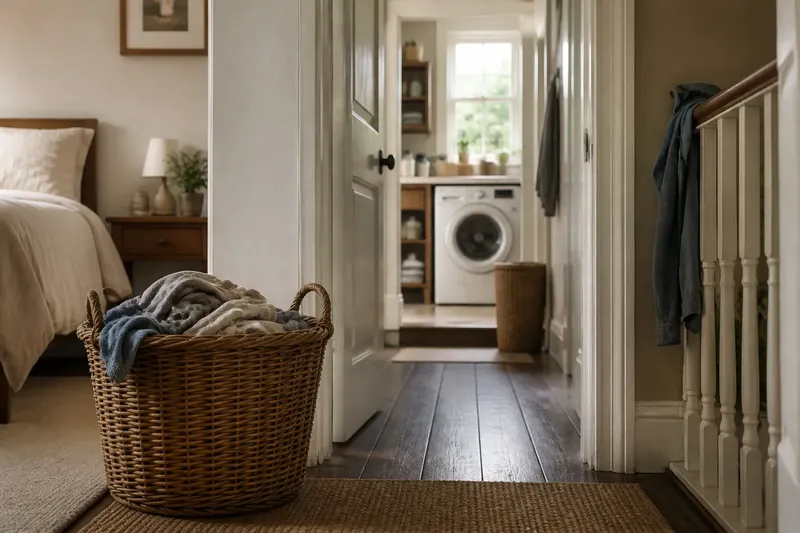
The laundry basket’s journey into the home is visible in an ordinary hallway: clothes come off in a bedroom, wait in a container, then travel to the washing machine. The laundry basket’s journey into the home is not a single, documented route shared by every household. It is a useful way to consider how washing arrangements and domestic space relate.
Where could washing take place before indoor plumbing?
Washing arrangements varied with a household’s location, resources and access to water. Some people washed at home using water carried from a well or pump; others used a yard, a shared washing place or paid help. These options existed in different combinations, rather than in one universal sequence.
When washing took place away from the main rooms, clothes and supplies had to be carried to and from the work area. A basket or bundle could contain items during that journey. Its role was practical: keeping garments together, rather than managing a routine organised around a modern laundry room.
Even when washing happened outside a living space, households needed somewhere to keep clothes awaiting attention and somewhere for clean items to dry. The arrangement depended on available space and local conditions, so there was no single household pattern.
What changed as washing moved closer to home?
Indoor water, drainage and domestic equipment made it possible for some households to do more washing in or near the home. The shift was uneven. A kitchen, scullery, yard or shared facility could remain the practical washing place, depending on the building and its services.
Bringing washing indoors changed the demands on rooms. Wet fabric needed a place to drain and dry; soap, tubs and other supplies needed somewhere to sit. A service area could keep these tasks out of the way of cooking or sleeping, though not every home had one.
The change was not simply a machine replacing hand work. It also involved arranging water, equipment and storage so that clothes could move between wearing, washing, drying and putting away without unnecessary trips.
How did the basket fit into a room-to-room routine?
As laundry moved between domestic spaces, the basket could serve as temporary holding space. One container might collect worn clothes near where people change; another might carry a load to the washing area. These jobs are distinct, even if the containers look alike.
Choose a basket’s position according to the action it supports. Near a bedroom, it can catch worn clothes before they reach the floor. Near a washing machine, a separate container can hold items ready to sort. Clean clothes still need a route to drawers or a wardrobe.
Imagine a household where worn clothes collect in a bedroom corner and the washing machine is downstairs. They place a basket beside the bedroom door, on the route downstairs, and put only worn clothes in it. The next time someone carries laundry down, the clothes travel together; the expected visible change is fewer garments left in the corner. The trade-off is that the basket takes up space near the doorway, so its position needs to leave the route clear.
A basket is temporary storage, not a substitute for drawers, hanging space or a linen cupboard. If clean clothes stay in it, the container can become a new holding point rather than the final stage of the routine.
How can laundry stages stay clear in a small home?
When washing, drying and storage happen in different places, clothes can seem scattered. Give each stage a visible destination, even if one room has to serve several purposes. A folding drying rack can be put away when not in use, while a basket can be moved aside when a passage needs to stay clear.
- Check where worn clothes collect; if they gather in one spot, place the dirty-laundry basket nearby, but if that blocks a doorway, move it to the nearest clear part of the route.
- Check whether the basket contains worn or clean clothes; if both are mixed, assign separate containers or clear labels, but if there is room for only one, empty it before using it for the other stage.
- Check whether the route to the washing machine is clear; if it is, keep the basket on that route, but if it obstructs passage, place it beside the route and carry the load across.
- Check where clean clothes are put away; if drawers or a wardrobe are nearby, carry items there after drying, but if storage is elsewhere, use a separate clean-laundry container for the trip.
- Check whether a drying rack is in use; if clothes are still drying, leave the rack where it has airflow and does not obstruct access, but if it is empty, fold it and return it to its storage spot.
- Check whether laundry supplies are easy to reach; if detergent and a laundry bag are stored near the washing area, keep them together, but if they crowd the work surface, store them in a nearby cupboard.
What questions help explain the laundry basket’s role?
Why did some people use a shared washhouse?
A shared facility could provide washing space and access to water where a household lacked a suitable area or convenient services. The reasons and arrangements varied by place and household.
Did every home have a separate laundry room?
No. Washing might take place in a kitchen, scullery, yard or shared facility. A dedicated room was one possible arrangement, not a universal feature.
What is a laundry basket for?
It holds clothes temporarily as they move between changing, washing, drying and storage. Its location works best when it supports one clear stage.
Why can laundry still feel scattered indoors?
Different stages may take place in different rooms, and each needs a destination. If clothes have no clear place between wearing and putting away, they can collect wherever space happens to be available.
What can the basket’s journey teach us about household routines?
A basket’s place reflects the route laundry takes through a home. Notice where clothes come off, where washing happens, where items dry and where clean clothes return. A sensible route need not require a dedicated laundry room; it does require a clear distinction between worn and clean items.
For the laundry basket’s journey into the home to be useful as an organising idea, focus on its present job rather than assuming every household followed the same history. Put it near the point where worn clothes collect, keep the route to washing clear, and give clean items a separate destination.
When deciding where a basket belongs, check the doorway and walkway as well as the clothes. A convenient spot is only useful if people can still pass through without moving the basket every time.