Why a Clear Walking Route Changes How a Room Works
A clear walking route helps a room feel easier to use. Learn how to trace its main path and assess furniture before moving anything.
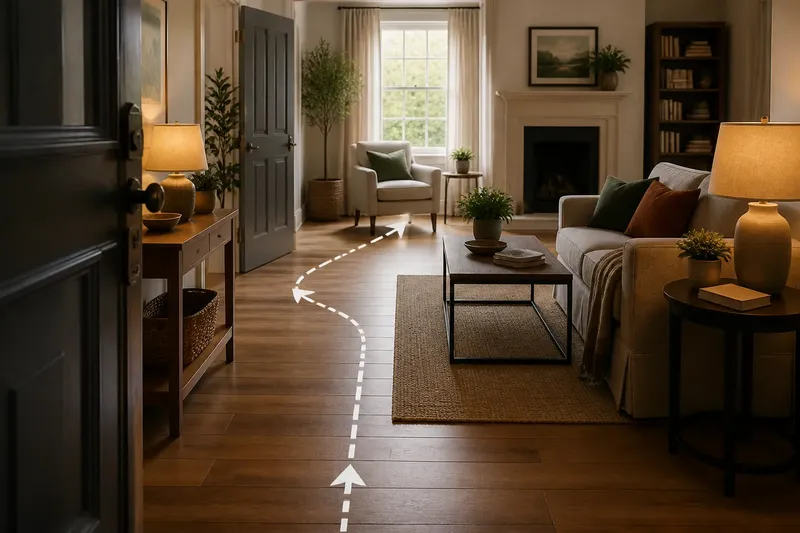
A clear walking route can change whether a room feels easy to cross or awkward to use. Before moving furniture, trace the path between the places people actually go: the doorway, a chair, a window, or the route through to another room.
The point is not to leave every floor area empty. It is to make the room’s main route legible, so people can move without guessing, squeezing past an obstacle or interrupting another activity. These checks help you understand the route before you shift anything heavy.
1. Where does the route begin and end?
Start with a real journey, not an idealised plan. Stand at the entrance and name the destination that matters most in ordinary use. In a sitting room, it might be the sofa; in a dining room, it could be a chair at the table. If the room connects two parts of the home, include the far doorway.
Walk that journey at a natural pace. Notice the line your body takes rather than drawing a straight line between two points. You may curve around a table or approach a seat from the side. A route should make sense from the perspective of someone entering, not only from a view of the floor plan.
Then trace any other journeys that happen often. A person may cross from the entrance to a window to open the curtains, or go from a desk to a bookshelf. Distinguish these regular movements from occasional trips. The main route deserves attention first; rare journeys need not dictate the whole arrangement.
Write down the starting point, destination and any turn. This simple description keeps the assessment tied to how the room is used.
2. Which path should stay easy to read?
A route is legible when its direction is apparent and its edges do not feel uncertain. People should be able to tell where to pass without weaving between small items or making a sudden detour. The route can bend, but each bend should feel like a natural part of the room rather than an obstacle course.
Look for visual cues that already guide movement. A doorway, the gap between a sofa and a wall, or the open side of a dining table can suggest a path. Furniture that sits across those cues may make the destination seem cut off, even if a person can technically squeeze through.
Notice whether the path leads directly into a working area. A passage through the middle of a chair-and-table arrangement may interrupt someone reading or chatting. A more comfortable line may follow the room’s edge, provided it still gives clear access to the seat or table.
Keep the route readable, not merely passable.
3. What gets in the way during an ordinary walk?
Walk the route again while paying attention to small movements. Do you turn your shoulders to clear a chair? Step around a rug corner? Pause to move a footstool? Such moments reveal friction that a quick glance across the room can miss.
Check what changes as objects are used. A dining chair pulled out from the table occupies more floor space than it does when tucked in. A cupboard door, desk drawer or recliner needs room to open or move. The route must work alongside these ordinary actions, not only while every object is in its resting position.
Consider the people and objects that travel through the space. Someone carrying a tray, guiding a child or using a walking aid may need a more direct, unobstructed line than a person walking empty-handed. This does not call for a universal layout; it means assessing the room for the movements it needs to support.
If you find a pinch point, note what causes it and when it appears. That distinction helps you decide whether the problem is a permanent obstruction or a temporary conflict with an activity.
4. How does the route meet doors, corners and furniture?
Inspect the route at its narrowest-looking places. Door leaves can occupy floor space when open, while a chair placed close to an entrance can make the first turn feel abrupt. At corners, check whether the route invites a smooth turn or forces a sharp sidestep.
Look at furniture edges from the walking approach. A table corner may be more troublesome on the natural line of travel than along a wall. A low item can also be easy to overlook if it blends into the floor or sits in a dim part of the room.
Pay attention to the destination as well as the passage. A route that ends behind a chair may leave no comfortable way to sit down. A path to a window should let someone reach the handle without leaning over a lamp or shifting a nearby object.
For a useful assessment, observe the room in the light and at the time it is normally used. Shadows and open doors can alter how clearly the route reads.
5. What should you test before moving furniture?
Make a quick record before attempting a rearrangement. A rough sketch is enough: mark the doorways, large furniture, usual destinations and the route you walked. Add arrows where you turn, and note the spots where you hesitated or changed direction.
Then use removable paper or painter’s tape to mark the proposed edges of a route on the floor, if the surface allows it. Keep the marks temporary and avoid placing anything that could create a trip hazard. Walk the imagined line and consider the space needed when doors open, chairs move or drawers are used.
Say you enter a sitting room and usually cross to a chair beside the window. Imagine that a side table sits between the doorway and the chair, making you turn towards the sofa before turning back. If a temporary outline shows that shifting the table to the sofa’s other side would leave a clearer approach, you have a reason to consider that change before lifting it. The observable result to look for is a more direct walk and an easier approach to the seat.
When deciding whether to move an item, ask:
- Does it block the route’s natural line?
- Does it create a squeeze point when nearby furniture is in use?
- Does it make the destination harder to reach or use?
- Would another position preserve the route without disrupting the room’s main activity?
- Can you mark and walk the proposed arrangement before shifting the item?
Move only the item linked to the problem, then walk the route again. Changing one thing at a time makes it easier to tell whether the path has become clearer.
6. Which questions help you judge a walking route?
Does a clear route mean the room should have an empty centre?
No. A route may follow a wall, pass beside a seating group or bend around a table. The aim is a clear line between important destinations, not a bare floor or a single prescribed layout.
Should the route run in a straight line?
Only if that is natural for the room. A gentle turn around furniture can feel easier than a straight path that cuts through an activity area. Judge the route by how it works while walking, not by its appearance on a sketch.
What if several people use the room differently?
Start with movements that happen often and identify any needs that require a more open approach. A shared room may need more than one clear path, but occasional journeys should not crowd out its main use.
How can I tell whether a proposed furniture change helps?
Walk from the usual entrance to the usual destination, then try the nearby activity with chairs, doors or drawers in use. A helpful change should reduce awkward turns or interruptions without making the destination harder to use.
What is the most useful final check?
After assessing the clear walking route, judge the room from the approach people actually use. Enter through the usual doorway, walk to the main destination, and notice whether the path remains easy to follow when the room is in use. That last check can reveal an obstruction that a drawing leaves out, or show that a curved route is already working well.
A clear walking route is not a rule about where furniture belongs. It is a practical way to decide whether an arrangement supports movement, and to make a change only when the route gives you a reason.